Commercial Metal Roof Coating
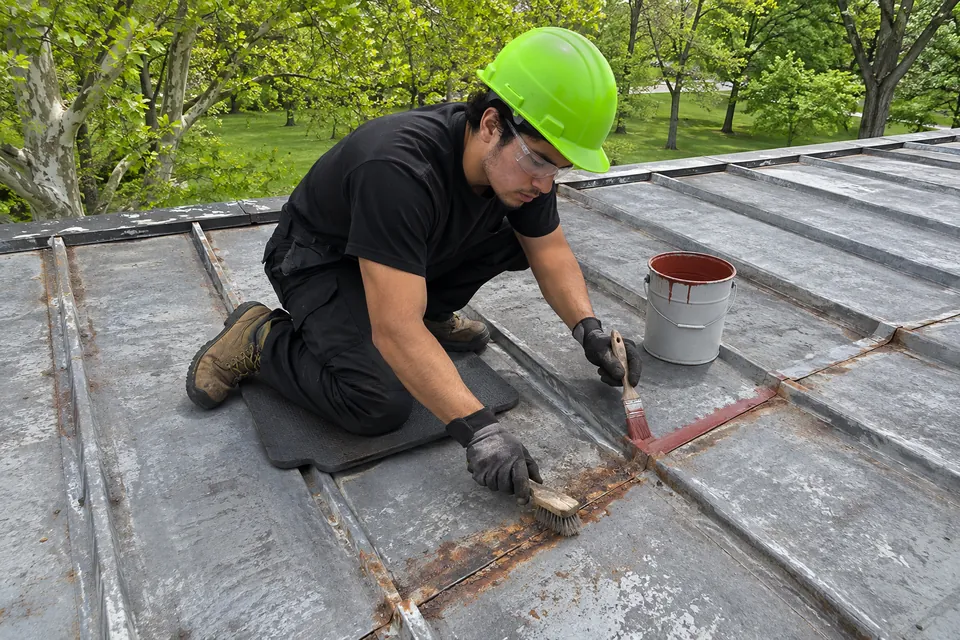
Repaired metal panels get primer, oversized fasteners, sealed laps, and full coating.
Commercial metal roof coating
Commercial Roofs · Ellington, CT
As an Ellington metal roof coating contractor, we inspect metal roofs after wind and storms, fix lifted panels and loose trim, and then coat commercial and light industrial buildings.
Ellington metal roof coating jobs often follow a storm. Wind lifts panel edges and ridge caps, branches dent ribs, and loose trim flaps until screws tear out. A coating goes on only after that damage is fixed.
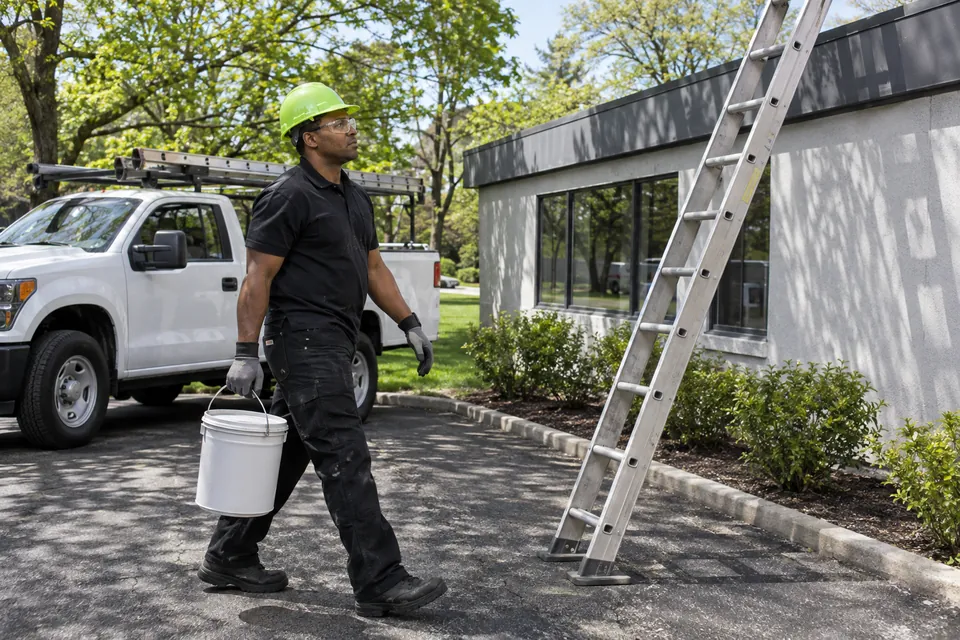
We walk the roof after the weather clears, photograph each damaged spot, and repair or replace panels and trim before any cleaning or coating starts.
After high wind, these are the first things we look for.
Loose trim along the roof edge lets wind get under the panels.
Water inside after a wind event points to a lifted lap. Call us.
Flapping panels widen screw holes, so oversized fasteners go in.
Branch strikes dent ribs and crack the paint where rust starts.
Storm debris clogs gutters and backs water onto panel ends.
After repairs, a coating ties the roof surface back together.
Re-fastened trim and coated laps leave fewer spots for wind to grab.
Photos and repair notes help with insurance questions and future planning.
Patched and replaced areas end up under the same film as the rest of the roof.
A white topcoat cuts summer heat through the panels.
Ellington light industrial roofs vary, so the system follows the roof after repairs.
Repaired metal panels get primer, oversized fasteners, sealed laps, and full coating.
Commercial metal roof coating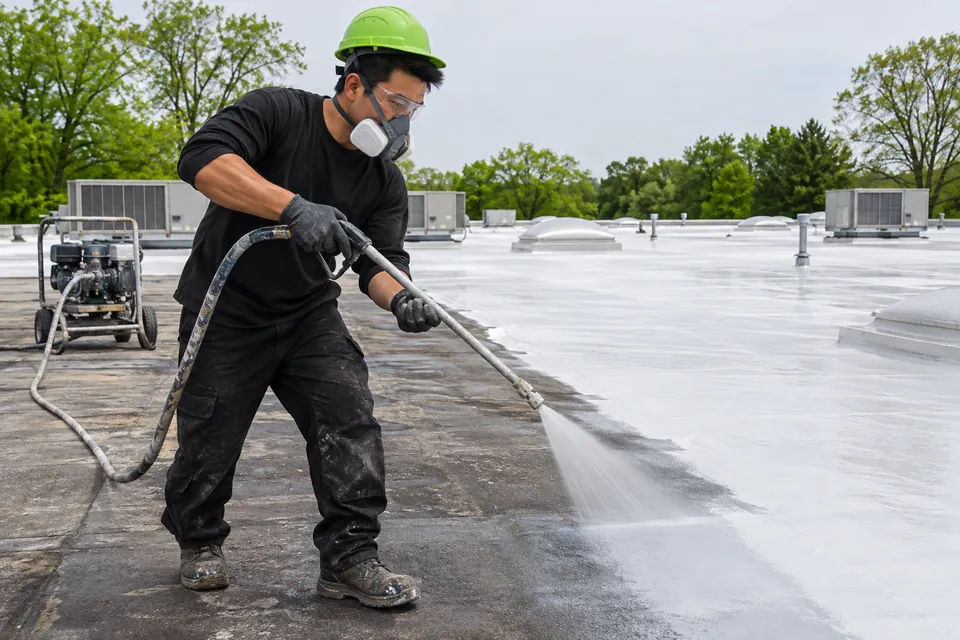
Low-slope sections that hold water after storms get silicone.
Silicone roof coating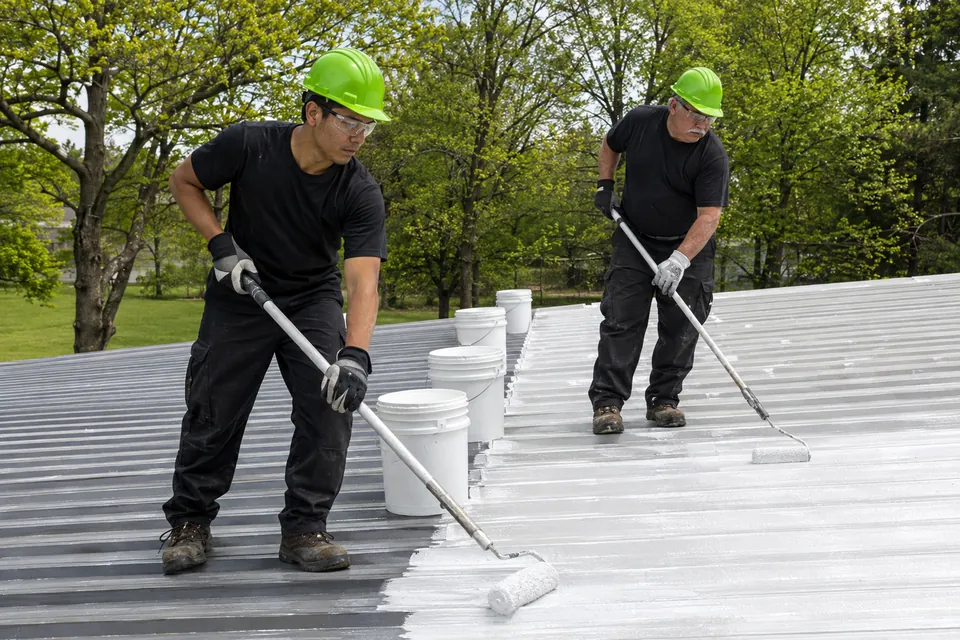
Sloped shop roofs that drain fast take acrylic in two coats.
Acrylic roof coating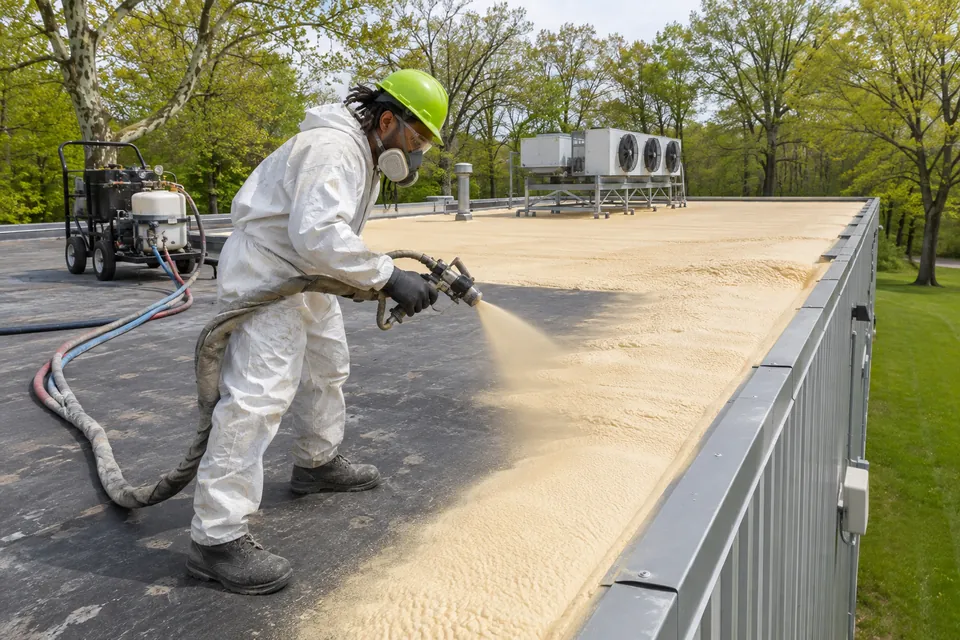
Flat additions can take spray foam, which bonds to the deck and adds insulation.
Spray foam roofing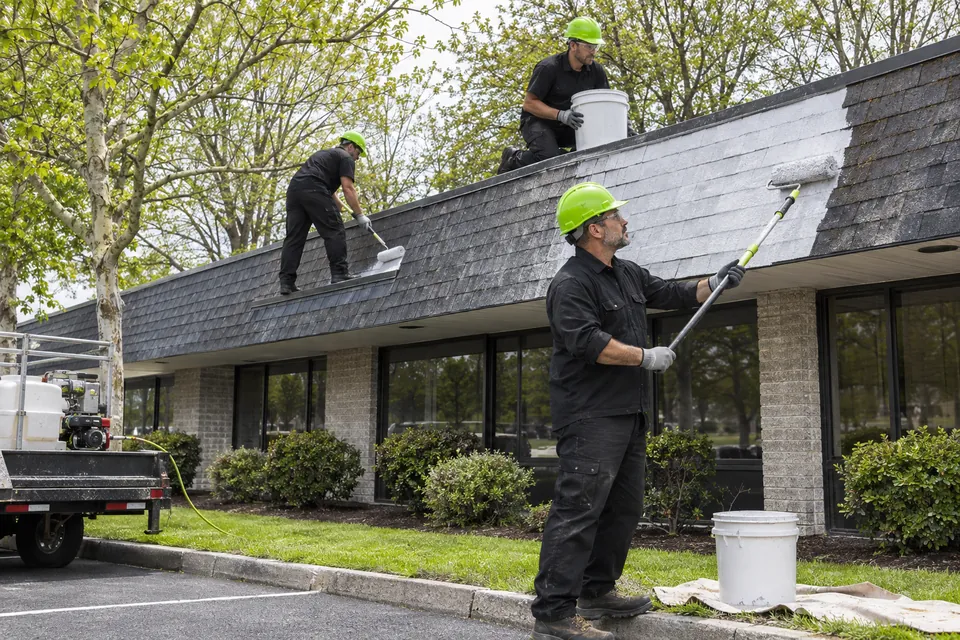
Office fronts with shingle roofs get a shingle coating after storm damage is fixed.
Shingle roof coatingCall and tell us where water came in and which side of the building faced the wind.
Call UsPlanning a coating once repairs are done? Get a ballpark range by roof size.
Get A Free Ballpark EstimateFive steps from storm check to finished coating.
After the weather clears and the roof is safe to walk, we photograph lifted trim, dented ribs, torn fastener holes, and debris in the gutters.
Trim is re-fastened, torn holes get oversized screws, and damaged panels are replaced so the roof is whole before cleaning starts.
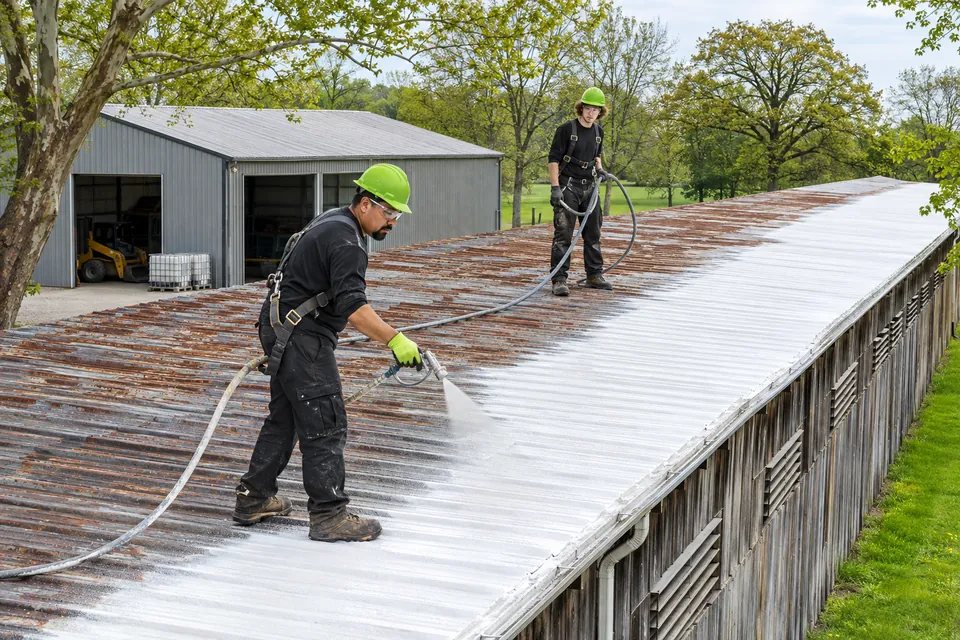
Storm debris is cleared, the roof is washed, and rust plus cracked paint from branch strikes get primer.
Side laps, end laps, and the roof edges wind lifted get fabric and sealant before field coats go on.
The coating goes on at full thickness, measured with a wet-mil gauge as each section is finished, so repaired and original areas match.
Shops, yards, and light industrial buildings in these towns are where we coat most. Elsewhere? Call us or send us a message.
Storefront blocks; shared-wall flashing and alley staging.
Thompsonville metal roof coatingFarm and storage roofs; washers and laps.
Suffield metal roof coatingOlder patched roofs; adhesion tests first.
Stafford Springs metal roof coatingWarehouses and docks; staging out of truck lanes.
Windsor Locks metal roof coatingRooftop units and solar racks; curbs first.
East Granby metal roof coatingStrip plazas; one storefront at a time.
Hazardville metal roof coatingWeather windows; repairs early, coating in dry stretches.
Granby metal roof coatingChurches and schools; dates set around events.
Somers metal roof coatingSeveral buildings; phased plan, worst roof first.
Broad Brook metal roof coatingLarge warehouses; coated in sections.
East Windsor metal roof coatingRural metal buildings; fully supplied trip.
Union metal roof coatingRoofs with repair history; written record.
Stafford metal roof coatingEaves, gutters, and edge trim first.
Willington metal roof coatingCoat-now versus replace-first areas.
Chaplin metal roof coatingAnswers for light industrial and shop owners.
Service
Yes. We coat metal roofs on commercial and light industrial buildings in Ellington. We check rust, seam gaps, loose fasteners, and drainage first, then match the system and thickness to what that roof needs.
We inspect after wind events, photograph the damage, repair lifted panels and trim, and then coat once the roof is whole again, so repairs end up under the same finish as the rest.
Bent or missing rake trim, a ridge cap sticking up, dents along the eave, and gutters pulled loose. Damage on the roof field usually needs a walk to see, which we do after the weather clears.
Cost
As a ballpark, about $2.50 to $4 per square foot of roof area. Storm repairs are priced as separate lines and depend on how many panels and trim pieces were damaged; the inspection sets both numbers.
That depends on your policy and your insurer. We provide dated photos and a written list of the damage we found, which you can pass to your agent with the claim.
Dented panels with intact steel are coated; torn or punctured panels are replaced first. We mark each one on the inspection sketch so you see the split.
Local
The Ellington building department handles permits for commercial roof work in town. Ask them whether storm repairs and the coating need a permit before the work starts.
As soon as the weather clears and the roof is safe to walk. Lifted edges and loose trim get worse with each windy day, and water that gets in keeps reaching insulation.
Yes. Self-storage buildings, contractor shops, and yard buildings in Ellington are common metal roofs for us, and many have long runs of exposed fasteners.
Tell us when the storm hit and what you see inside, and we will plan the inspection of your Ellington roof.