Ready For Foam
- Slope
- Flat or low slope
- Deck
- Dry and solid
- Penetrations
- Many vents and curbs
- Goal
- Add insulation
- Season
- Dry, calm weather

Commercial Roofs · Enfield, CT
As an Enfield spray foam roofing contractor, we spray foam over flat and low-slope commercial decks, wrap every vent and curb, and protect it with a topcoat.
Enfield spray foam roofing fits certain decks; this comparison shows which.
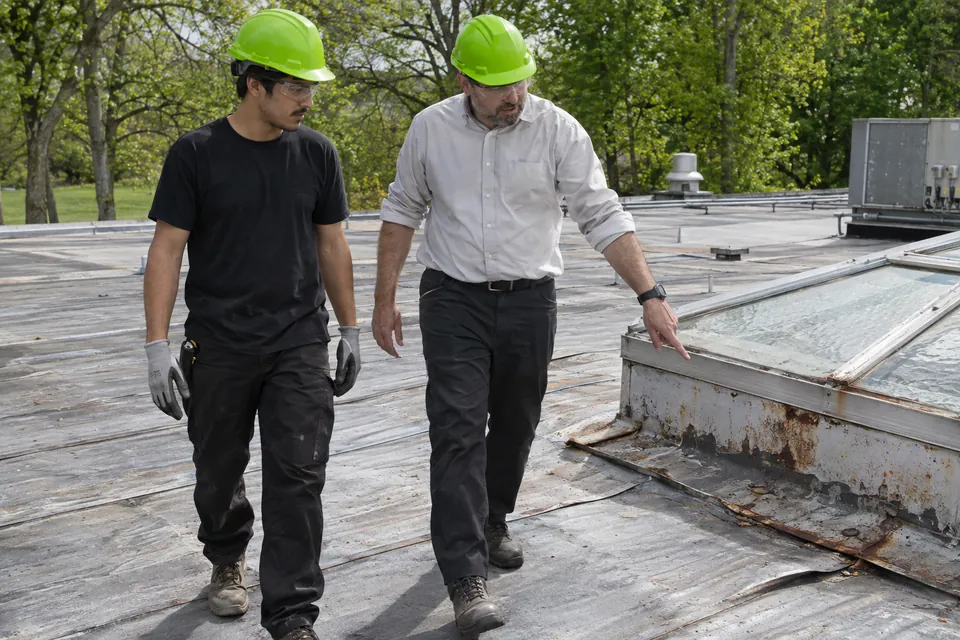
Foam needs a dry, clean deck. These conditions get handled first.
Wet insulation under the deck has to be found with a moisture check and removed before any foam goes down.
Many vents, pipes, and curbs close together are where sprayed foam beats sheet systems that need a seam at each one.
Foam can be sprayed thicker in low areas to build slope toward drains, which ends most standing water.
Blisters in an old membrane get cut out and dried, so the foam bonds to a flat, dry surface.
Water inside near a roof drain means the drain flashing is open now; call us before the next rain.
Spray foam is one of five systems; the table compares insulation and build.
| System | Adds Insulation | Build | Best Roof |
|---|---|---|---|
| Spray Foam | Yes | Foam plus topcoat | Flat decks with many vents |
| Silicone | No | Coating film | Low slope that ponds |
| Acrylic | No | Two coats | Pitched panels |
| Commercial Metal Coating | No | Primer plus coating | Ribbed metal panels |
| Shingle Coating | No | Coating over shingles | Asphalt shingle roofs |
Foam answers flat roofs that leak at many small openings.
Sprayed foam fills around each pipe, curb, and support, so there is no separate seam to fail at every penetration.
The foam layer adds insulation above the deck, which helps offices, cold rooms, and heated shops below it.
Thicker foam in low spots moves water toward drains, ending most of the ponding that shortens other roofs.
Punctures and worn spots get cut out and refilled with foam and topcoat instead of patched with a different material.
Call and name the unit or vent nearest the leak; curbs and drain flashing are checked first.
Call UsPlanning foam for a flat roof? Get a ballpark range by roof size.
Get A Free Ballpark EstimateFive steps, on dry, calm days only.
We check the deck for moisture, map every penetration, curb, and drain, and plan where the foam needs extra thickness to move water off.
Wet insulation and blistered membrane come out and get replaced, because foam sprayed over moisture will not hold.
The deck is cleaned, and walls, units, intakes, windows, and nearby vehicles are masked against overspray.
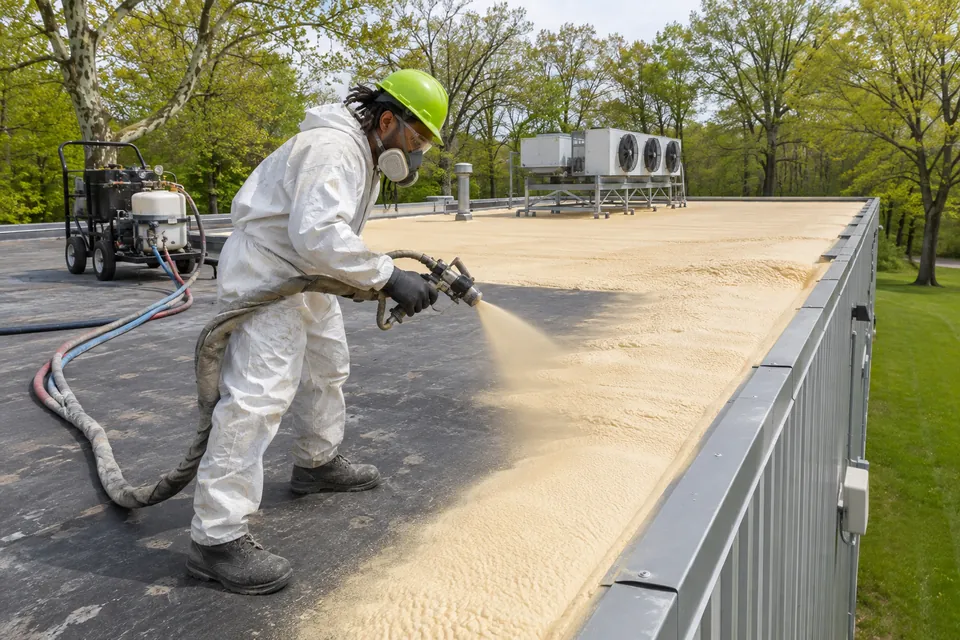
Foam goes on in passes to the planned thickness and slope, building up low spots so water heads toward the drains.
A protective coating covers the foam within a day, since sunlight breaks down foam that is left bare.
Foam suits flat roofs with many openings. These suit others.
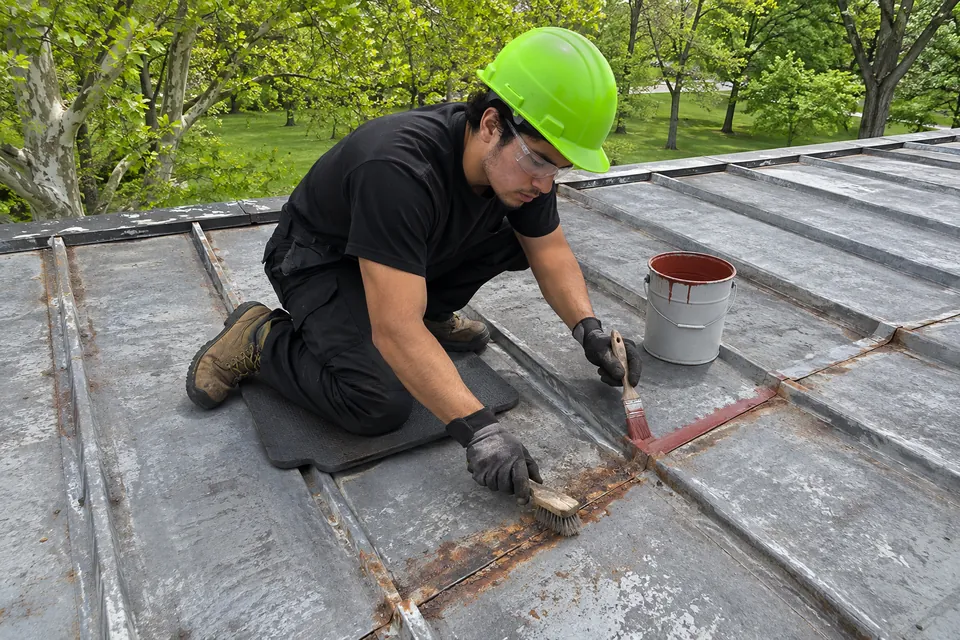
Ribbed metal panels with rust and worn fasteners get primer, new screws, sealed laps, and a coating.
Commercial metal roof coating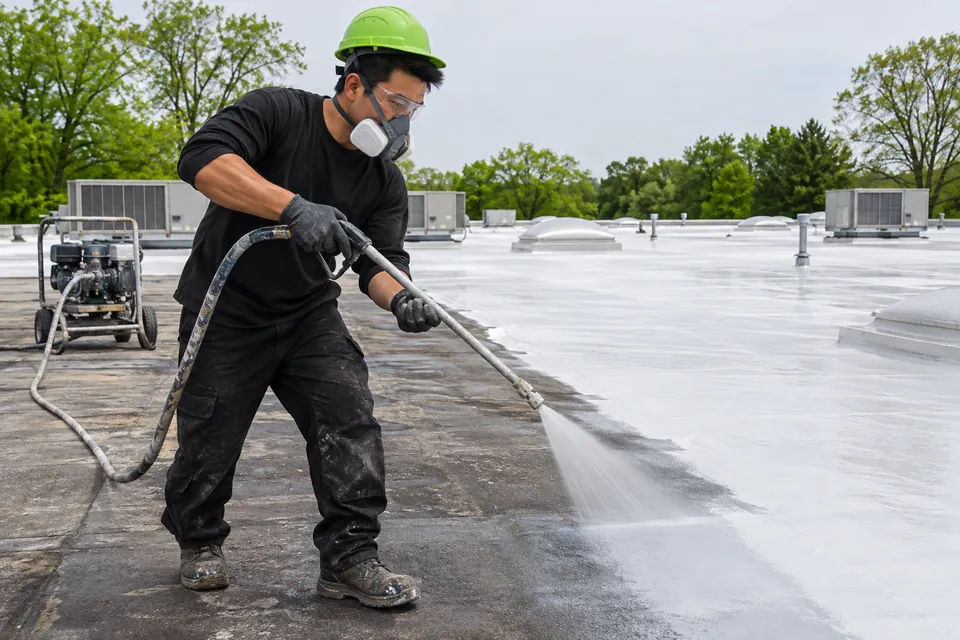
Flat roofs that need only a coating, without added insulation, can take silicone over the existing surface.
Silicone roof coating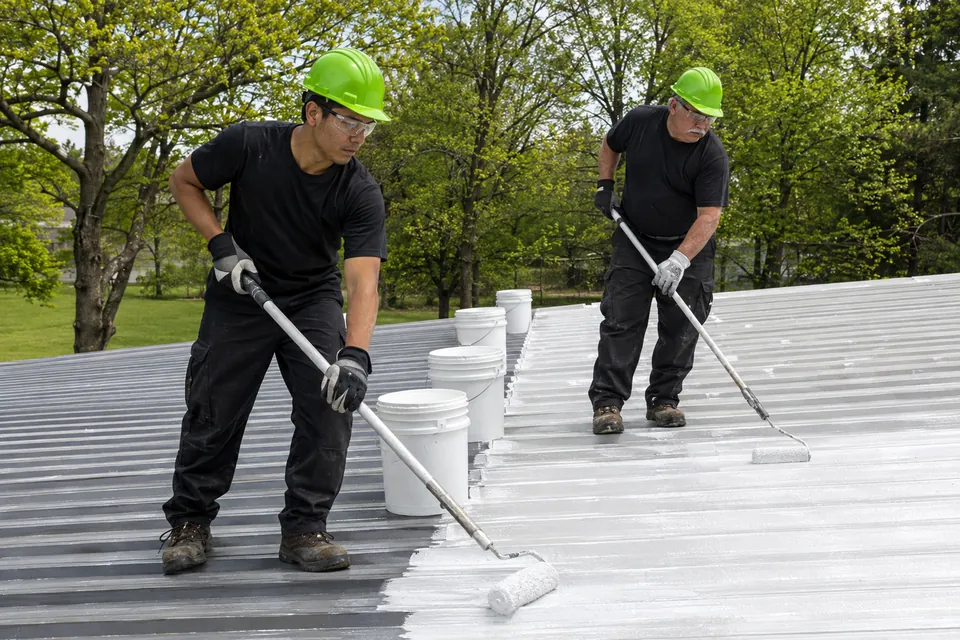
Pitched panels that drain well take acrylic in two contrasting coats during warm weather.
Acrylic roof coating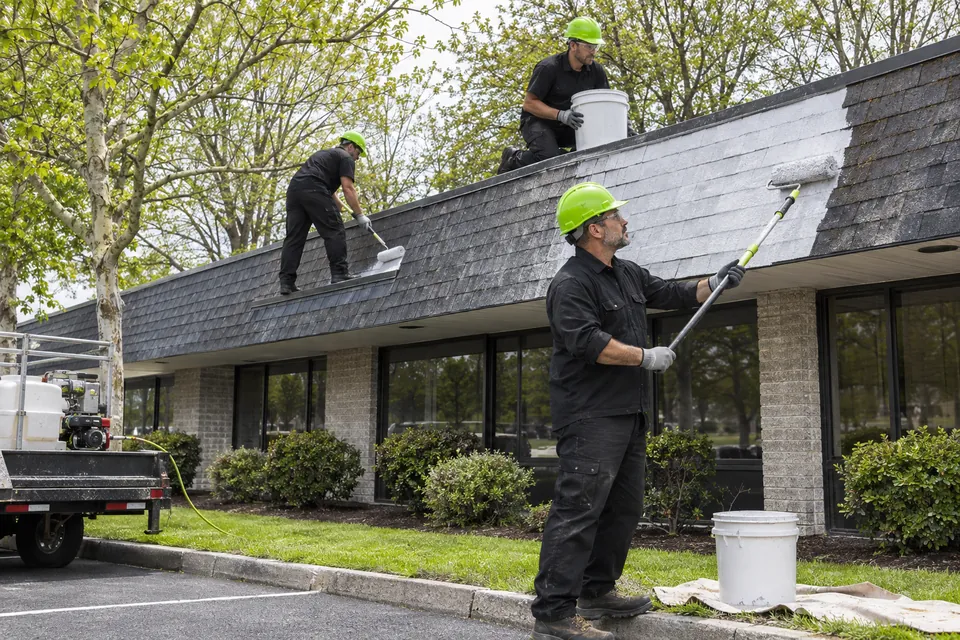
Shingle roofs on the same property get damaged tabs replaced and a coating made for asphalt.
Shingle roof coatingAnswers about foam roofs in Connecticut.
Fit
It fits low-slope roofs with many penetrations or odd shapes, because it is sprayed as a liquid, expands into one continuous layer, and adds insulation. It needs a dry deck, calm weather, and a topcoat; steep roofs and wet decks need other work first.
Sunlight breaks down foam unless its topcoat stays intact, so it needs regular inspection and recoating. The install season is narrower in Connecticut, birds and dropped tools can puncture it, and an uneven spray leaves low spots. Good prep and upkeep manage each one.
Thickness varies across the roof by design. It is set by the insulation the building needs and by drainage, with extra foam sprayed in low areas to build slope toward drains, and we check depth with a probe as the passes go on.
Upkeep
No set number of years. Foam thickness, topcoat condition, drainage, and how quickly punctures get repaired decide it. Inspections and recoating when the topcoat wears thin keep the foam underneath protected and in service.
When the topcoat has worn thin, cracked, or chalked enough that foam starts to show through. Yearly checks and a look after major storms tell you when that point is near, and recoating keeps the foam without removing it.
Usually silicone or acrylic, chosen for how the roof drains, how much foot traffic it gets, and how it will be maintained. The topcoat protects the foam from sunlight, so its thickness is measured just like the foam underneath.
Choosing
Pros: it wraps every penetration, adds insulation, and builds slope where water sits. Cons: it needs dry, calm weather to install and regular topcoat upkeep. For an addition crowded with ductwork, the pros usually win.
Yes, on solid metal with rust treated and fasteners secured. Foam over ribbed metal fills the ribs, adds insulation, and gives a flat surface for the topcoat.
The damaged foam is cut out in a clean shape, refilled with new foam, and topcoated, which keeps the roof continuous. Small punctures from birds or dropped tools are quick repairs when they are caught on a yearly check.
Tell us how many vents and units are on the roof, and we will plan the inspection.