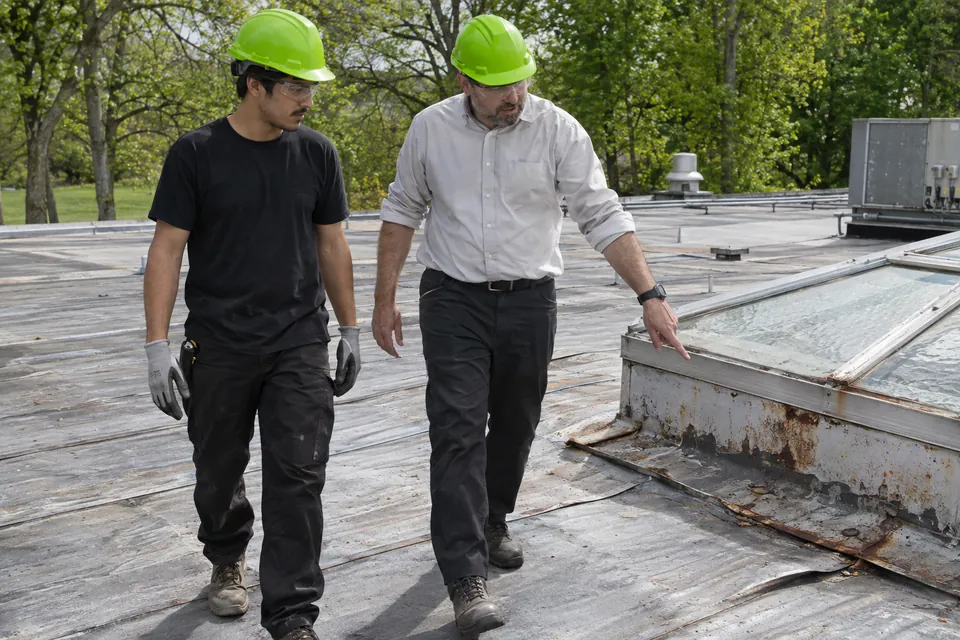
Ready To Coat
- Steel
- Solid under surface rust
- Fasteners
- Loose but holes intact
- Laps
- Open but panels flat
- Insulation
- Dry
- Framing
- Straight, no sag

Commercial Roofs · Enfield, CT
As an Enfield commercial metal roof coating contractor, we restore rusted, leaking metal panel roofs in place with rust primer, new fasteners, sealed laps, and a measured coating.
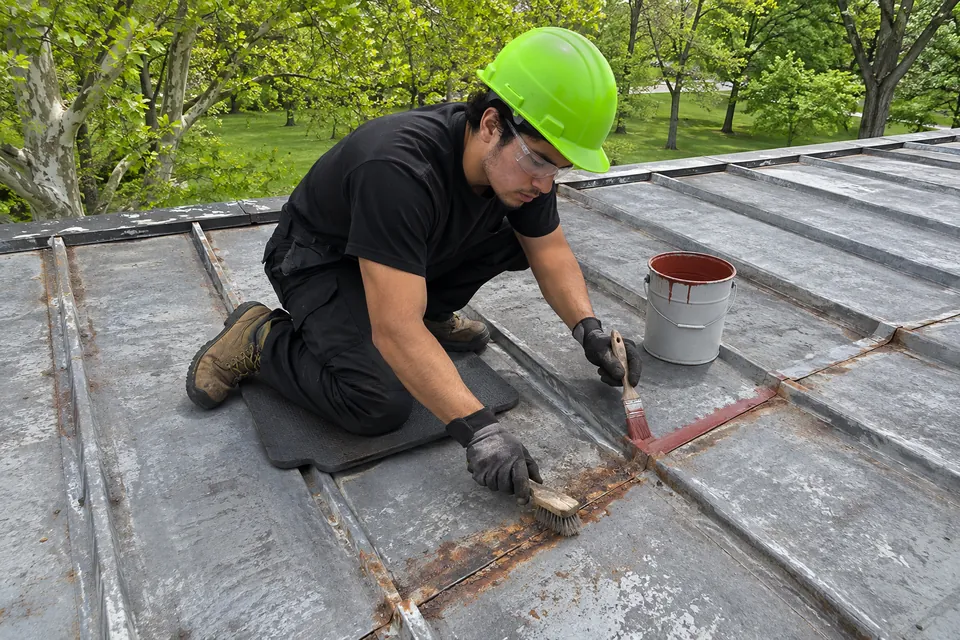
Enfield commercial metal roof coating works on a roof with solid steel; this comparison shows when it fits.
These panel conditions decide how much prep goes in before the coating.
Orange film on solid steel gets cleaned and primed; it is the normal starting point for restoration.
Washers that dried out let water follow each screw. Every worn one gets replaced.
Wind and daily heat movement open side laps along the slope; they get stitched with new screws and sealed with fabric.
Water inside means open laps right now; call us before the next rain.
Ridge caps and rake trim loosen first in wind and let rain blow under the panels; they get new fasteners before the coating.
Each system has a place on a metal building; the panels and drainage decide which one.
| System | Fits Which Metal Roof | Prep Focus | Typical Building |
|---|---|---|---|
| Commercial Metal Coating | Ribbed and corrugated panels with surface rust | Rust primer, fasteners, lap sealing | Warehouses and tobacco sheds |
| Silicone | Low-slope panels where water sits | Drainage check, seam detailing | Distribution buildings |
| Acrylic | Pitched panels that drain well | Primer and two contrasting coats | Barns and shops |
| Spray Foam | Flat or low-slope decks with many vents | Dry deck, protective topcoat | Plants and office additions |
| Shingle Coating | Shingle sections on the same property | Tab replacement, flashing | Front offices |
Restoring metal panels keeps the roof in service and the building open.
Side laps, end laps, ridge caps, and screw heads end up under one continuous coating instead of separate beads of caulk that crack on their own schedule.
Panels stay in place, so production, storage, and shipping below keep going while each section is restored.
A light topcoat reflects summer sun that bare or faded steel absorbs, which helps plants and warehouses without much insulation.
Primer and coating shut out the moisture and air that keep surface rust spreading along ribs and panel edges.
Call and tell us which bay or office gets wet; open laps and backed-out screws above it are the usual cause.
Call UsPlanning a restoration? Enter roof size and condition for a ballpark coating range.
Get A Free Ballpark EstimateFive steps, the same order on every commercial metal roof.
We walk each panel run, probe for rust holes and soft spots, count worn fasteners row by row, and mark open laps, loose ridge caps, and cracked curb flashing on a roof sketch.
Panels are pressure washed, loose scale is ground or brushed off the ribs, and rust-inhibiting primer goes on bare steel, stained laps, and panel ends near the eave.
Worn screws and dried washers come out, and oversized fasteners with new washers go into the same holes so the panels are tight again before sealing.
Fabric and sealant go over side laps, end laps, curbs, skylight edges, and ridge caps, which carry extra material because they move and leak first.
Coating goes on to the system's thickness, checked with a wet-mil gauge as each section is finished, and the readings go into your job record.
Not every section of a property is ribbed metal. These systems cover the rest.
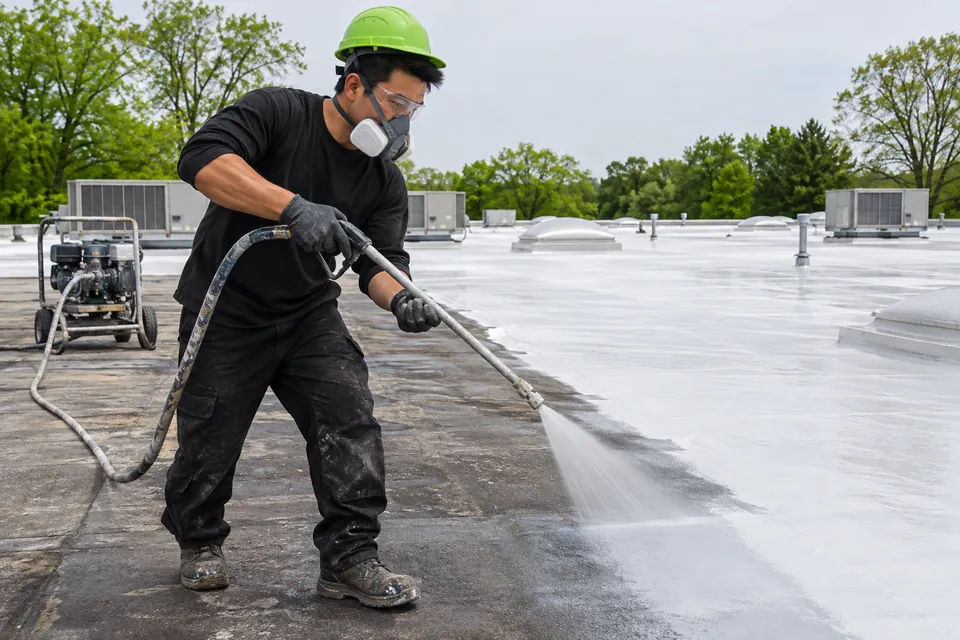
Flat and low-slope sections where water sits after storms or snowmelt take silicone, which tolerates ponding.
Silicone roof coating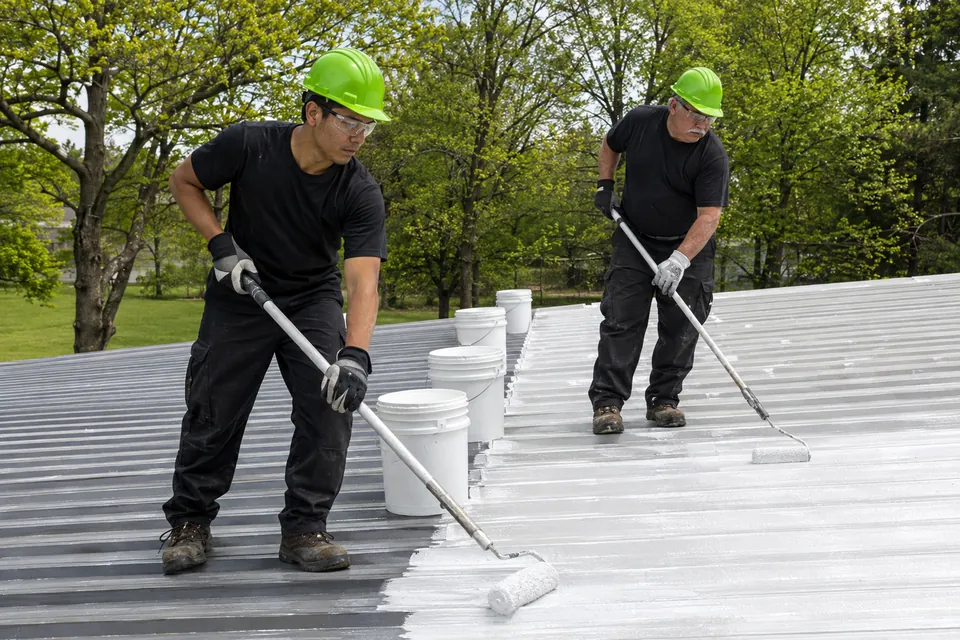
Steep, well-drained panels can take acrylic in two contrasting coats instead of a heavier system.
Acrylic roof coating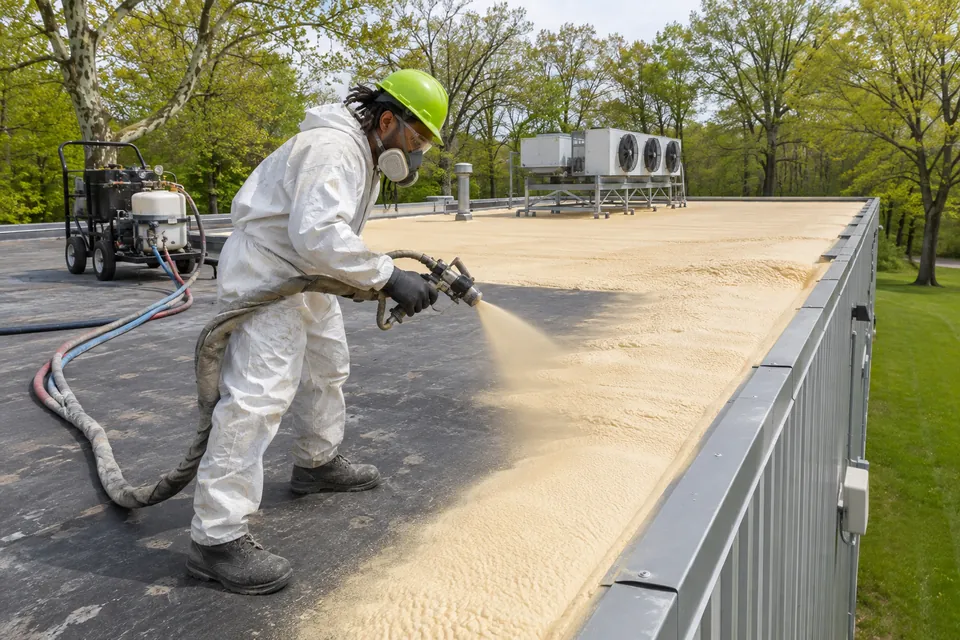
Decks crowded with ductwork and units get sprayed foam that adds insulation under a topcoat.
Spray foam roofing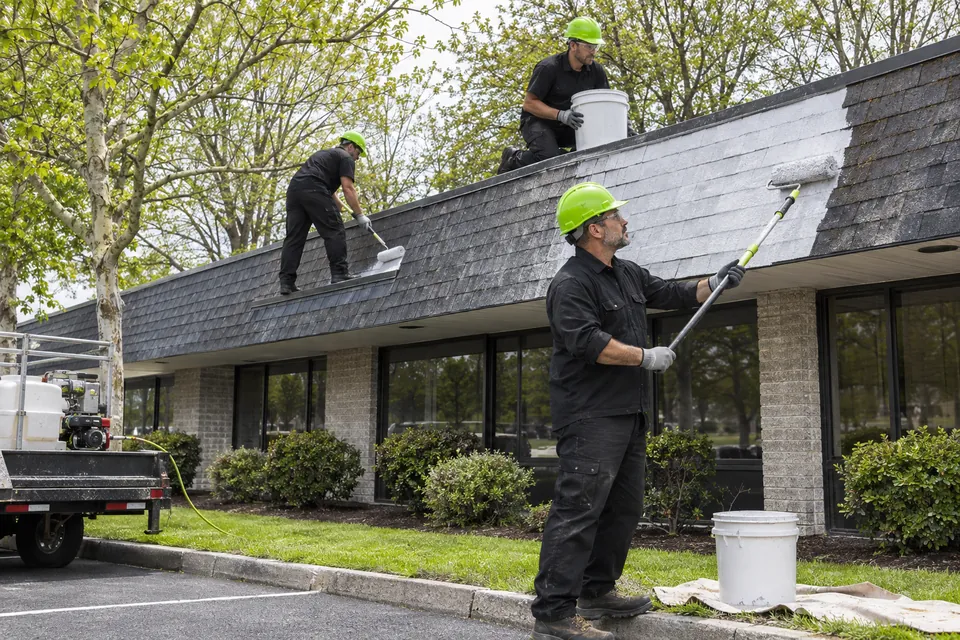
Shingle-roofed offices on the same lot get damaged tabs replaced and an asphalt-rated coating.
Shingle roof coatingAnswers about restoring metal panel roofs.
Restoration
It is the full sequence that returns an aging metal roof to service without replacing it: inspect, wash, treat rust, replace fasteners, reinforce seams and penetrations, prime, and coat to the system's thickness so panels, laps, and screw heads sit under one film.
Rust treatment comes first, because coating over loose scale lets rust keep spreading underneath. We grind or brush scale off, wash the panels, and prime bare and stained steel, with extra attention at panel edges and screw heads where snowmelt sits longest.
Choosing
The one that matches the roof. Silicone holds up where water sits, acrylic suits pitched panels that drain, and some roofs need a primer or base coat first. We pick the system after the inspection, based on slope, drainage, and seam condition.
Service life comes more from prep, applied thickness, drainage, and upkeep than from the product name. A system matched to the roof's slope and condition, applied at full thickness and inspected regularly, stays in service longest.
Cost And Permits
As a ballpark, coating runs about $2.50 to $4 per square foot of roof area and replacement about $5 to $8. Coating skips tear-off and disposal, and it applies only when panels and framing are solid; the inspection confirms which.
Enfield's building official has up to 30 days to issue a permit or explain a denial, and applications are filed online. Check the town's exemption list early and set the start date around that window, since the coating season is short.
Send the roof size and what you see inside, and we will set up the inspection.