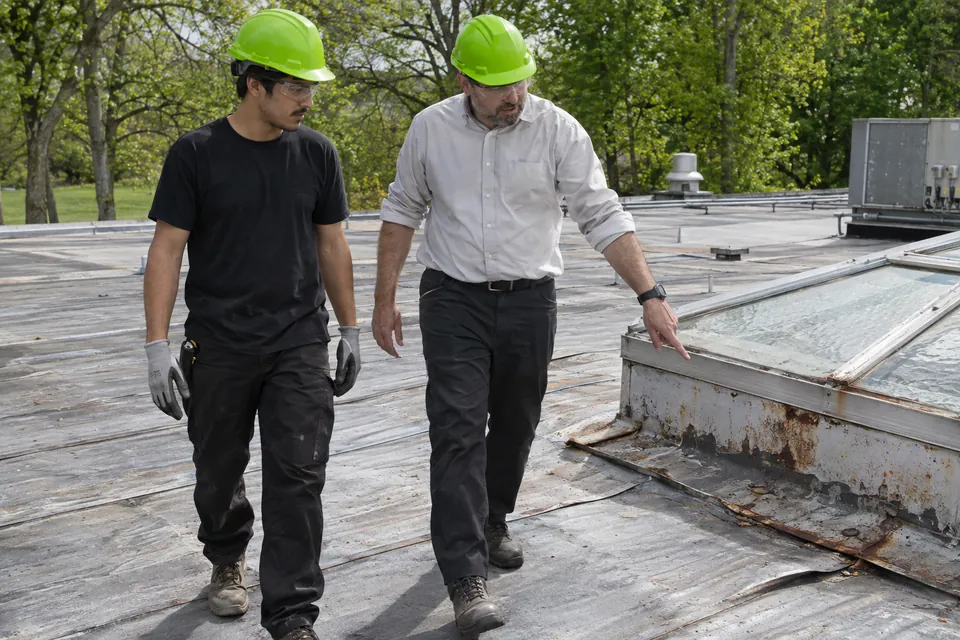
Ready For Acrylic
- Slope
- Pitched, water runs off
- Water
- No puddles after rain
- Surface
- Primed metal
- Season
- Late spring into early fall
- Plan
- Recoat with acrylic later

Commercial Roofs · Enfield, CT
As an Enfield acrylic roof coating contractor, we roll and spray acrylic over pitched metal roofs that shed water, in two contrasting coats during warm, dry weather.
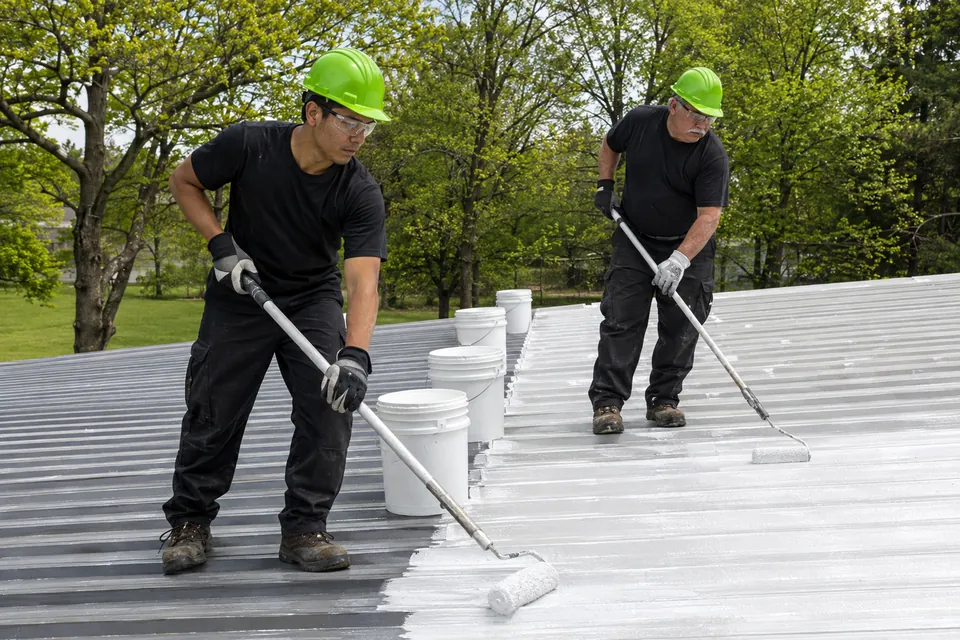
Enfield acrylic roof coating fits roofs that drain; this comparison shows where it stops fitting.
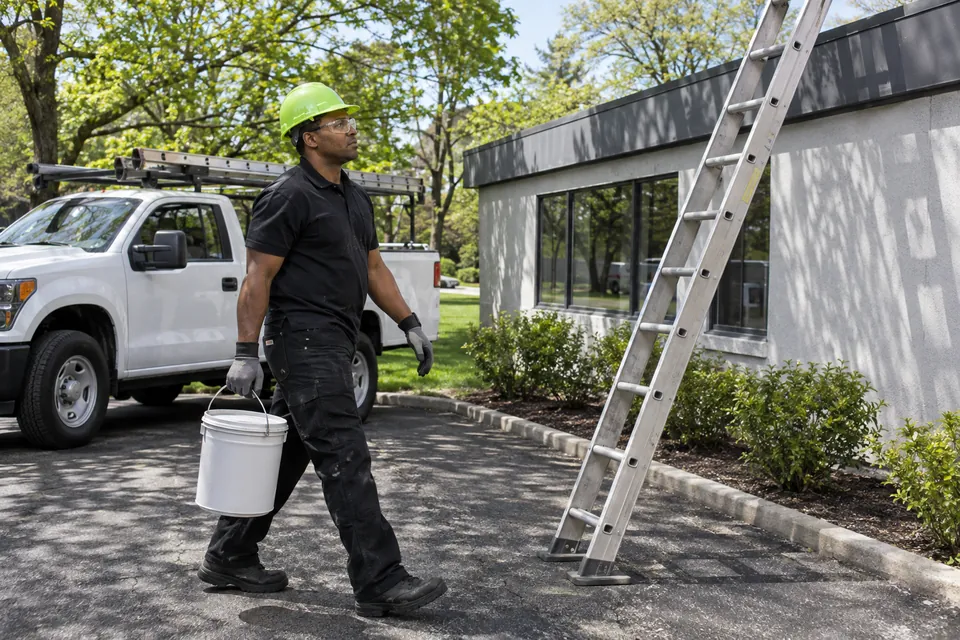
Acrylic needs these conditions handled before it goes on, because it bonds to clean, primed, well-drained metal.
Old factory paint that chalks onto your hand or shows rust spots gets washed and primed so acrylic has something solid to grab.
Side laps that open as panels expand and contract get fabric and sealant under the acrylic coats.
Any area that still holds water a day after rain gets a different system or a drainage fix, since acrylic wears fast under standing water.
Water inside along the eave line means the bottom laps are open right now; call us before the next storm.
Fasteners that spin or lift get replaced with oversized ones before the base coat goes on.
Acrylic is one of five systems; the table compares weather and slope needs.
| System | Cure Weather | Roof Slope | Recoat With |
|---|---|---|---|
| Acrylic | Warm, dry days | Pitched, draining | More acrylic |
| Silicone | Tolerates cooler days | Low slope, ponding | Silicone only |
| Commercial Metal Coating | Follows its topcoat | Any metal panel | Matching system |
| Spray Foam | Dry, calm days | Flat or low slope | Foam topcoat |
| Shingle Coating | Dry days | Pitched shingle | Shingle coating |
Acrylic suits roofs that already shed water well.
A white acrylic finish reflects sunlight that bare or faded steel absorbs, which cuts heat inside barns, shops, and warehouses.
Two contrasting coats show the crew exactly where film is thin, so every rib and lap gets its full coat.
When it wears thin after years of weather, acrylic is cleaned and recoated with more acrylic, with no tear-off.
Over a rust primer, acrylic seals moisture out of the panels and slows new rust at laps and screw heads.
Call and describe where the drip shows up along the slope; eave laps and screw rows are checked first.
Call UsPlanning acrylic for next summer? Get a ballpark range now and book the warm-weather dates.
Get A Free Ballpark EstimateFive steps, scheduled into the warm months.
We confirm the roof drains, check old paint for chalking and rust, mark open laps and loose fasteners, and look for any spot that holds water.
Coating days are set for warm stretches with no rain forecast through the cure time, usually from late spring into early fall.
Panels are pressure washed, loose paint is scraped, and primer goes on wherever rust or chalking shows so the acrylic bonds.
Laps, fasteners, curbs, and penetrations get fabric and extra material before the field coats, because those spots move most.
A base coat and a contrasting top coat go on to the target thickness, so any thin spot shows before the crew leaves.
Acrylic fits pitched roofs. These fit the others.
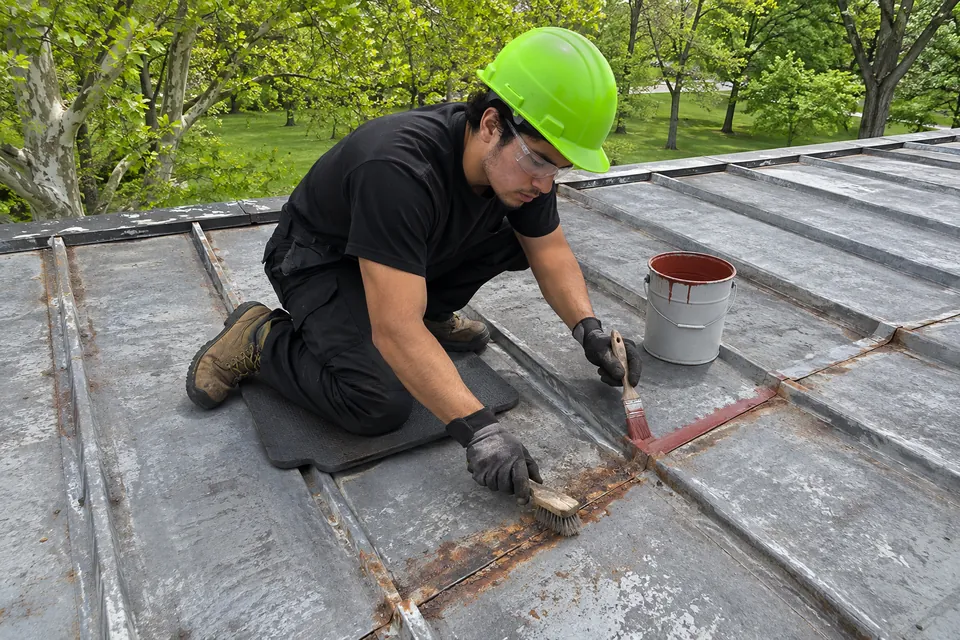
Rusted ribbed panels with loose screws get a full restoration with primer, new fasteners, and sealed laps.
Commercial metal roof coating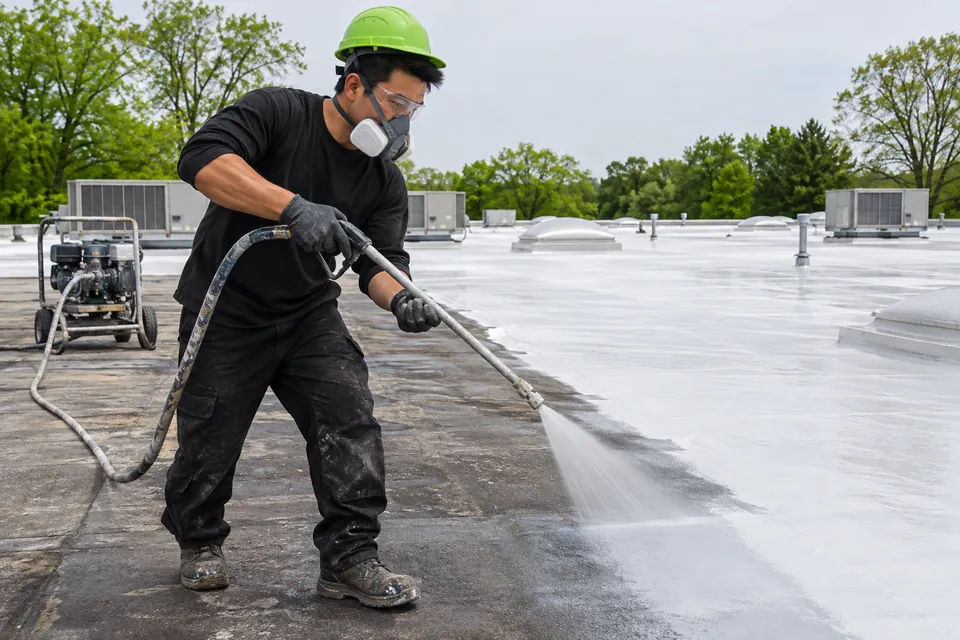
Roofs that hold water after storms take silicone instead, since acrylic wears fast under standing water.
Silicone roof coating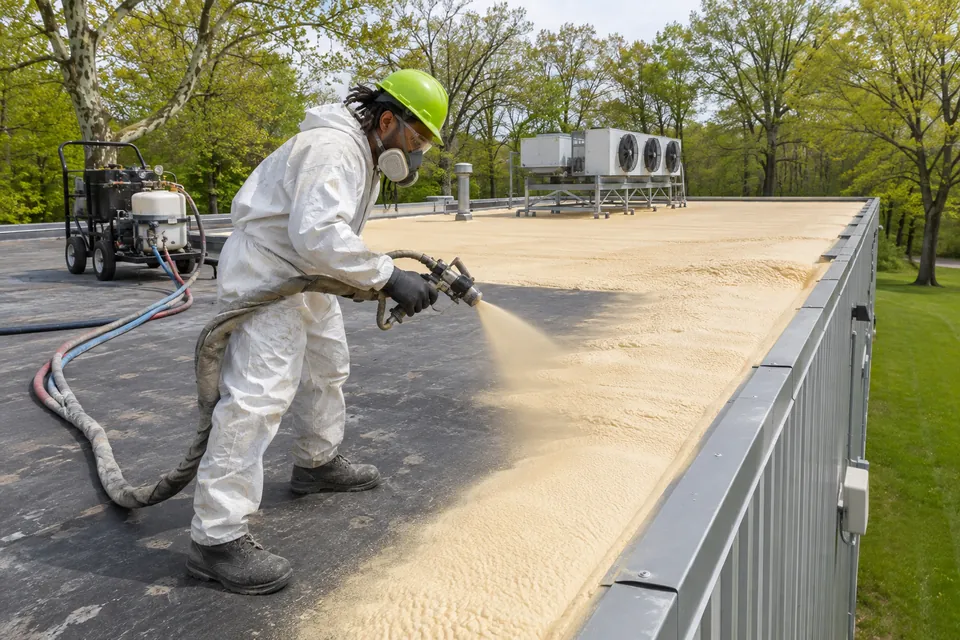
Decks crowded with vents and pipes take spray foam, which adds insulation under a topcoat.
Spray foam roofing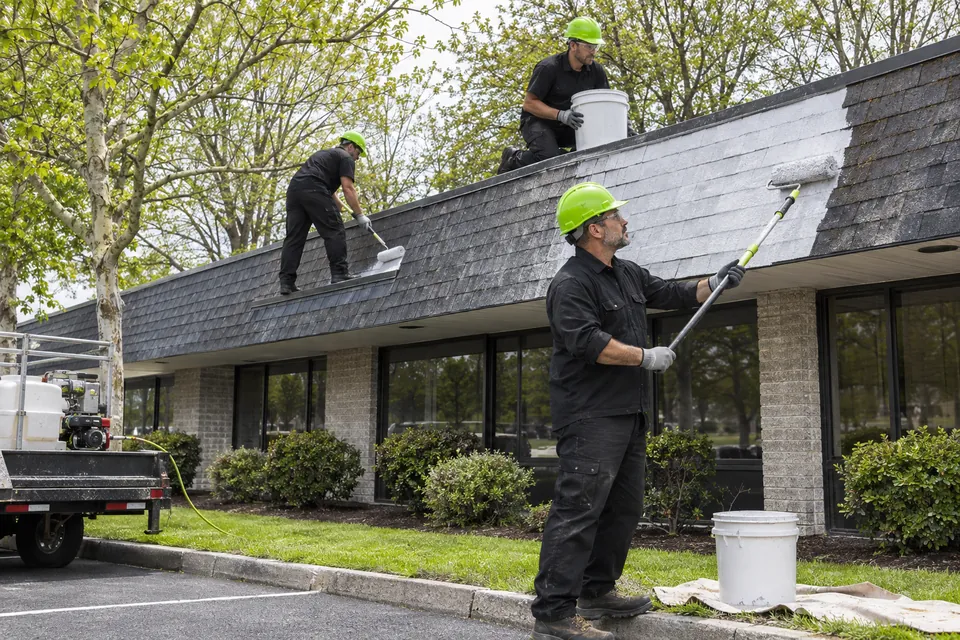
Shingle roofs on offices and retail fronts get new tabs, sealed flashing, and an asphalt-rated coating.
Shingle roof coatingAnswers about acrylic on Connecticut roofs.
Performance
Yes, on metal roofs that shed water. It reflects sun and bonds well to primed metal, but it needs dry, mild weather to cure and should stay off areas that pond. In Connecticut that means scheduling acrylic from late spring into early fall.
It depends on applied thickness, priming, and drainage. Acrylic wears gradually, getting thinner over the years rather than failing at once, and regular inspections show when a recoat with more acrylic is due.
Contrasting colors show the crew where the second coat is thin or missing, so full coverage is checked by eye as well as by gauge. The top coat is usually white for reflectivity.
Application
At least two, often in contrasting colors so full coverage is easy to see, built up to the system's thickness. Seams and fasteners get fabric first, and rough or heavily rusted panels can need a third coat; we set that after the inspection.
Usually. Rusted or chalky panels get a primer matched to the acrylic system so the coating bonds and the rust stays sealed under it. Clean, newer panels sometimes need only washing, which the inspection confirms.
Yes, after cleaning and an adhesion check. Older acrylic that is chalky but still bonded makes a good base for a fresh coat, while peeling areas are scraped and primed first.
Choosing
Silicone for roofs where water lingers after storms or snowmelt; acrylic for sloped metal that drains, with easy acrylic recoats later. Slope, drains, seam condition, and how much foot traffic the roof gets decide it.
From spring into fall on dry days above the coating's minimum temperature. Dew, rain in the forecast, and cold nights shorten work days, so we follow the forecast and stop when curing would suffer.
A white acrylic finish reflects sunlight that bare steel absorbs, so spaces under the roof take in less heat on summer afternoons.
Tell us how your roof drains, and we will plan the inspection.