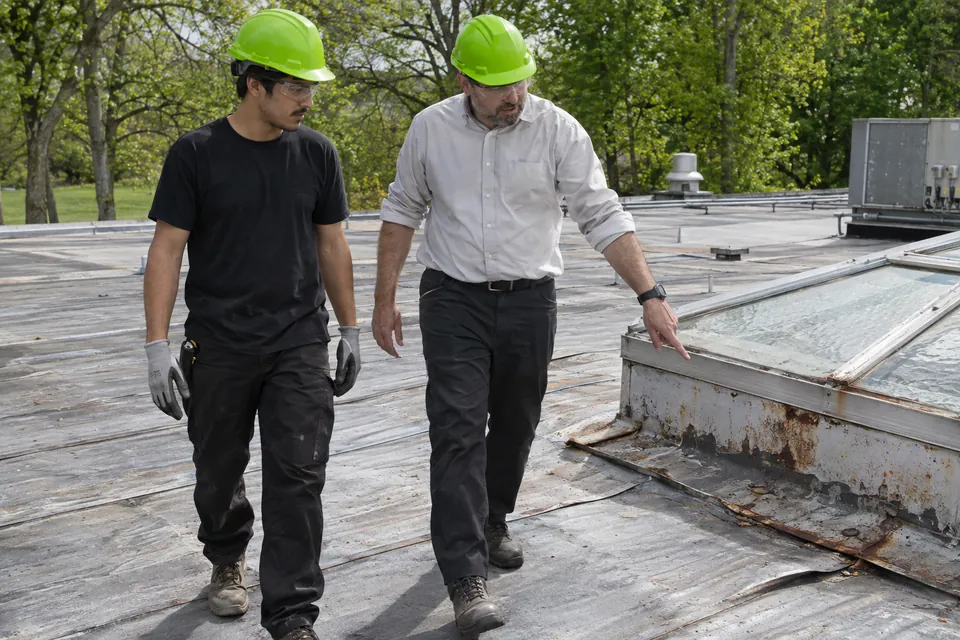
Ready For Silicone
- Slope
- Low slope or flat areas
- Water
- Puddles that dry in a day or two
- Surface
- Clean, dry, rust primed
- Old Coating
- None, or old silicone
- Traffic
- Light, with walk pads

Commercial Roofs · Enfield, CT
As an Enfield silicone roof coating contractor, we spray silicone over low-slope metal and flat commercial roofs where water sits after storms, with seams built up first.
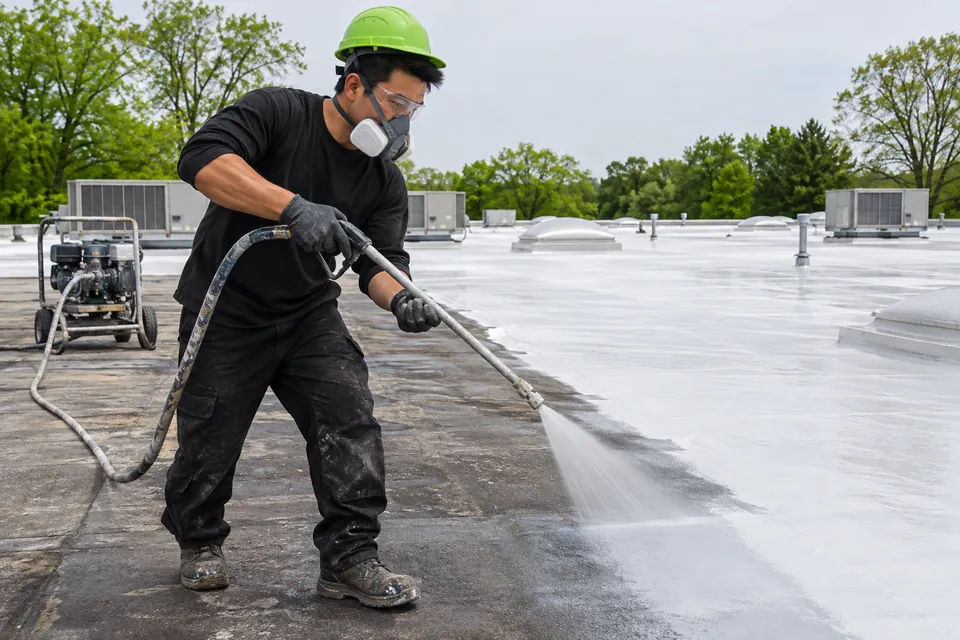
Enfield silicone roof coating suits roofs that hold water; this comparison shows the line.
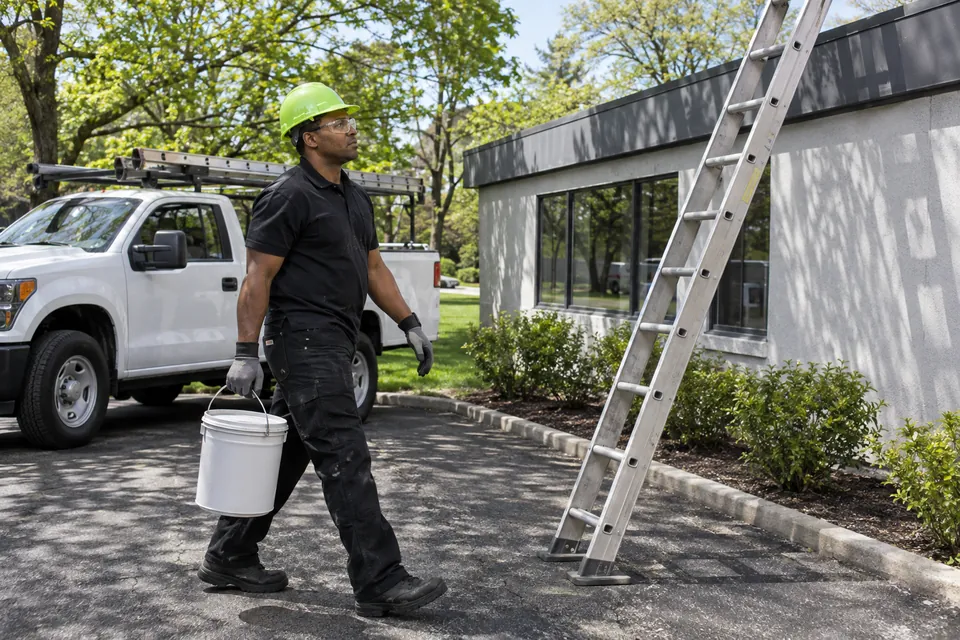
These are the conditions that point us toward silicone, and what each needs first.
Water lingering in low spots for a day after rain is where silicone earns its place.
Melt that backs up near drains and scuppers sits on the coating for days.
Seams under standing water leak first; they get fabric before spraying.
A drip below a puddle line means the seam there is open; call us now.
Blocked drain strainers make ponding worse and get cleared during prep.
Silicone is one of five systems; the table shows how ponding and recoats compare.
| System | Standing Water | Recoat With |
|---|---|---|
| Silicone | Handles it well | More silicone |
| Acrylic | Keep it off ponds | More acrylic |
| Commercial Metal Coating | Depends on the topcoat chosen | Matching system |
| Spray Foam | Slope built into the foam | Foam topcoat |
| Shingle Coating | Sloped roofs only | Shingle coating |
Silicone answers the water that lingers on low-slope roofs.
Silicone tolerates water that sits for a day or two after storms and snowmelt, which is where other coatings break down first.
It resists ultraviolet light, so the finish holds its body on roofs with full sun exposure all summer.
When it wears thin, the roof gets cleaned and recoated with more silicone instead of being torn off.
Through freeze and thaw it stays flexible, moving with the panels as temperatures swing across a Connecticut winter.
Call and tell us where the puddle sits and where the drip lands inside; the seam under the pond is checked first.
Call UsPlanning silicone for a low-slope roof? Get a ballpark range by roof size.
Get A Free Ballpark EstimateFive steps, with water handling built into each.
We map where water ponds and for how long, check insulation for moisture, look at drains and strainers, and identify any old coating already on the roof.
The roof is pressure washed, drains and strainers are cleared, and the surface is left to dry fully, because silicone needs a dry roof to bond.
Rusted metal and some older surfaces get a primer matched to the silicone system, so the coating bonds instead of sitting loose.
Seams, fasteners, drains, and penetrations get extra silicone and reinforcing fabric first, since water sits longest at those spots.
Field coats are sprayed to the target thickness, checked with a wet-mil gauge, with extra attention in low areas that hold water.
Silicone is right for water-holding roofs. These fit other roofs.
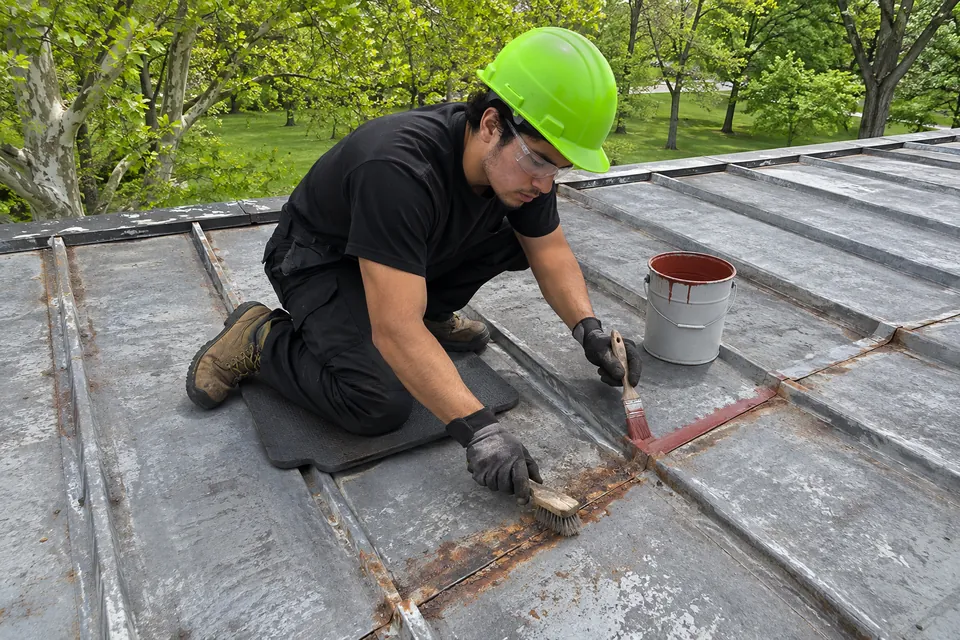
Pitched ribbed panels with rust and loose screws get a full restoration with primer and new fasteners.
Commercial metal roof coating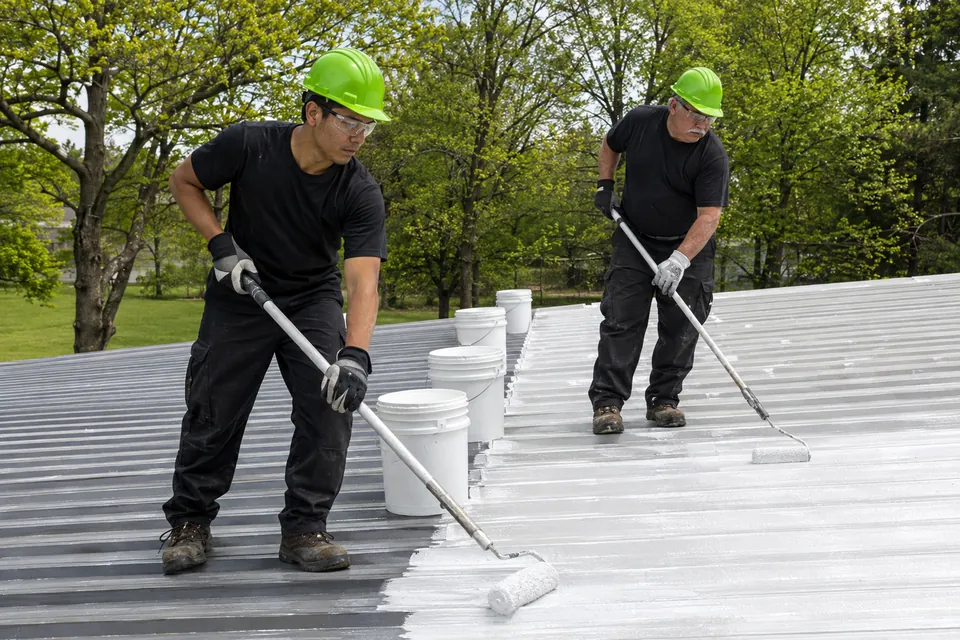
Well-drained sloped panels take acrylic, which recoats easily with more acrylic later.
Acrylic roof coating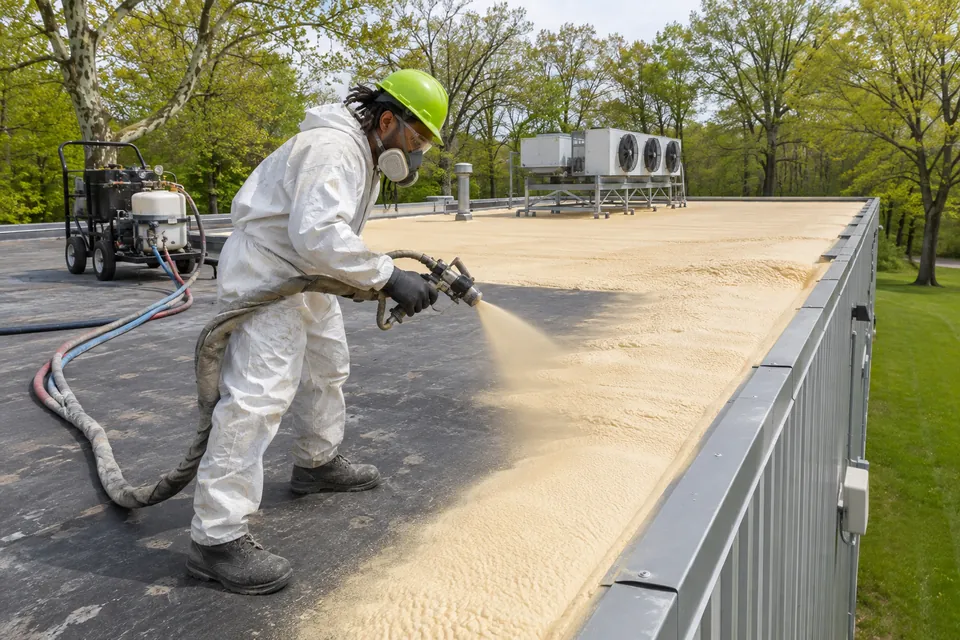
Flat decks that need insulation as well as a coating get spray foam under a topcoat.
Spray foam roofing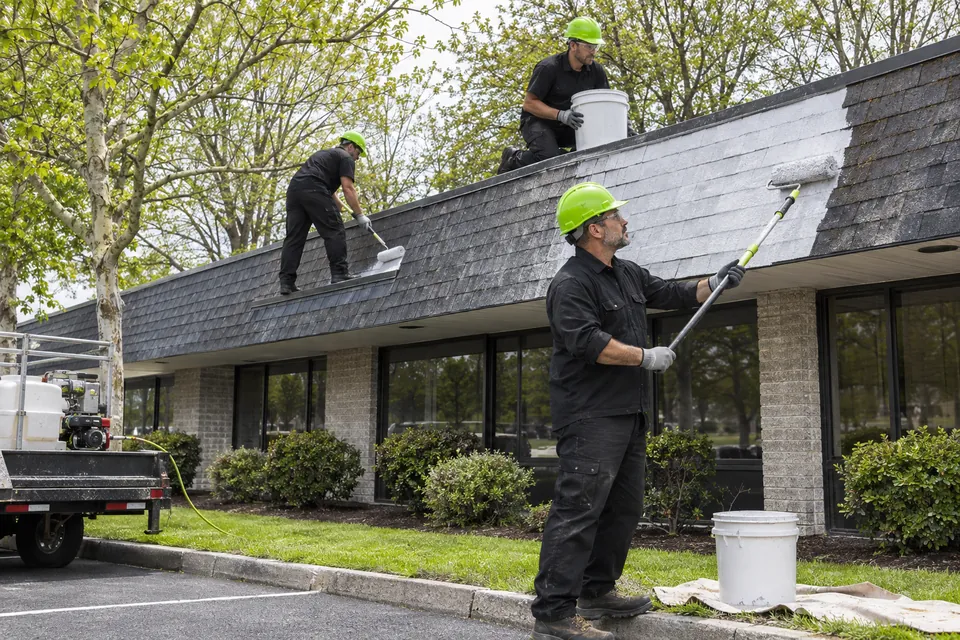
Shingle roofs on offices and retail fronts get a coating made for asphalt shingles.
Shingle roof coatingAnswers about silicone on Connecticut roofs.
Performance
Yes. It resists sunlight and tolerates water left after rain or snowmelt. It works when the surface is clean and dry, rust is primed, and seams and fasteners are sealed. Dirt clings to it over time, and later recoats need silicone again, since most other coatings will not bond to it.
No fixed number of years applies. Dry thickness, cleaning and priming, foot traffic, and how ponding, debris, and shovel damage are handled decide it. Yearly inspections and quick patches keep it working, and a worn roof gets recoated with silicone instead of torn off.
Mostly for appearance and reflectivity. Silicone holds dust more than acrylic, so a light wash every few years keeps it bright, and it does not change how well the coating keeps water out.
Application
Enough to reach the thickness the system specifies. Many silicone systems go on in one or two coats measured in mils, with seams, fasteners, and drains built up with extra material first. We check thickness as we spray, so the whole roof gets a full film and low spots get extra.
Water in open seams freezes and widens gaps while panels expand and contract with each temperature swing. Silicone seals seams and screw heads in one flexible layer that moves with the metal, and those are the spots we reinforce first because winter damage starts there.
Silicone tolerates cooler temperatures than many coatings, which helps in spring and fall. The roof still has to be dry and above the label minimum during application.
Choosing
Usually the old acrylic is cleaned and tested first, and a primer or partial removal is needed before silicone goes on. We check the old coating during the inspection and tell you which applies before pricing.
Silicone for roofs that hold water after storms, acrylic for sloped panels that drain fast. Recoat plans matter too, since silicone recoats only with silicone while acrylic recoats easily with acrylic.
Walk pads along paths to rooftop units protect the coating where service techs walk most and are a common add-on for busy roofs.
Tell us where water sits on your roof, and we will plan the inspection.